
TP-Link has launched two new Tapo smart home devices for Australian front doors: the Tapo D260 Doorbell Pro and the Tapo DL130 smart lock.
The company says both products keep biometric processing and data on the device, rather than sending it to the cloud.
The Tapo D260 Doorbell Pro (RRP $399) is available now. TP-Link says it records in 4K with a 180-degree diagonal field of view and uses dual motion sensors and radar-powered detection to reduce false alerts from shadows, passing headlights and moving branches. It also includes on-device facial recognition, with the device building a library of familiar faces. TP-Link says the doorbell can generate AI alerts for people, animals, vehicles and packages without requiring a subscription.
According to TP-Link, the doorbell can be used wire-free or hardwired. The company claims up to 180 days of battery life based on laboratory testing, and says hardwiring enables 24/7 recording with pre-roll footage. It also includes calls to a user’s phone with an option for voice masking.
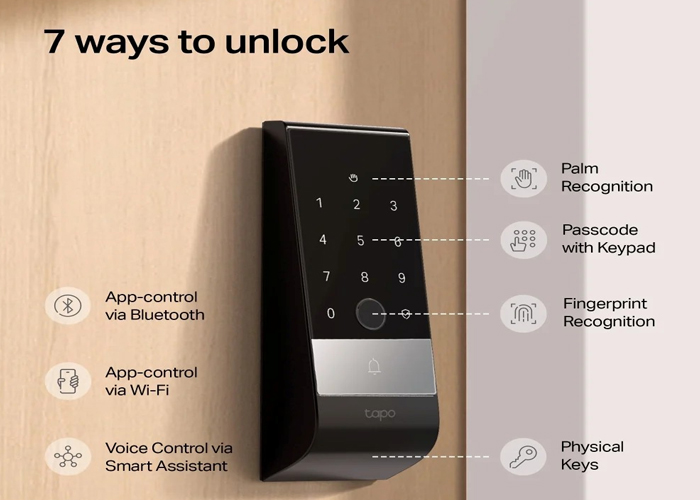
The Tapo DL130 smart lock (RRP $499) is due from mid-November. TP-Link says the lock supports seven unlocking methods, including palm vein recognition and fingerprint recognition. The company claims palm recognition takes under 0.33 seconds and works with wet, dirty or sweaty hands, as well as children’s hands.
TP-Link says the lock can store up to 100 fingerprints and that palm and fingerprint data is stored in the lock and not sent online. Other features listed include permanent, one-time and scheduled passcodes, an activity log, real-time notifications, auto-lock, a door-left-open alarm and a built-in doorbell. The company says the lock is BHMA Grade 2 certified and IP65 weather-rated, and includes a rechargeable main battery with a built-in backup and USB-C emergency power.
“A lot of what happens at the front door is everyday stuff, like your kids getting home before you and realising their keys are still on the kitchen bench. You want to see who’s there and let them in, without your face or fingerprints ending up in the cloud. That’s why we built both the doorbell and the lock to keep that data on the device itself,” said Neville Wang, Managing Director, TP-Link Australia and New Zealand.