
Lenovo has announced new infrastructure products and services aimed at organisations modernising virtualised environments and preparing for AI-driven workloads, as enterprises reassess virtualisation platforms and operational requirements across hybrid IT.
The company said the expanded portfolio includes the ThinkAgile VX850 V4 system, Premier Deploy for Infrastructure services, and an updated set of “Express Solutions” that pair Lenovo infrastructure with validated configurations for common virtualisation and hybrid cloud stacks.
“Organisations are focused on modernising virtualised infrastructure to improve efficiency and resilience while maintaining flexibility in an increasingly complex IT landscape,” said Scott Patti, Vice President, Infrastructure Solutions Group, Lenovo. “Lenovo is helping customers modernise the infrastructure they rely on today with greater choice and control, while building an AI-ready foundation that can evolve as their requirements change.”
New ThinkAgile platform
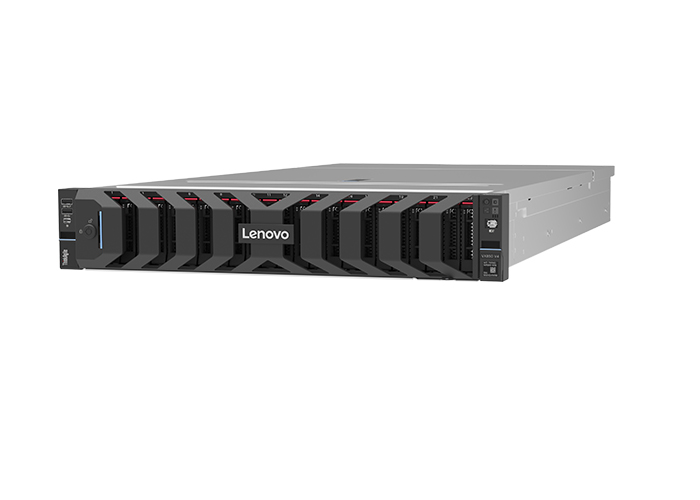
Lenovo positioned the ThinkAgile VX850 V4 as infrastructure designed for “highly-virtualised and demanding in-memory workloads”, and said it is intended to support both structured and unstructured data. The company said the system is aimed at consolidating and modernising critical workloads as AI becomes more embedded in enterprise applications and workflows.
Deployment options added
Within its Infrastructure Deployment Services, Lenovo said it will offer three deployment options: Standard Deploy, Premier Deploy, and Premier Deploy Plus. The company said the tiered model is intended to help customers select an approach based on project complexity and internal IT capability, with Premier Deploy options adding implementation, operational handover support, and—at the top tier—extended post-deployment assistance and a one-year infrastructure health assessment (excluding DE Storage Array).
Validated configurations across partner platforms
Lenovo also outlined an expansion of its Express Solutions, describing them as pre-validated infrastructure configurations combining Lenovo technology with partner software platforms to reduce integration work and accelerate deployment. The company listed configurations for Microsoft Hyper-V Ready Solutions and Windows Server; Red Hat OpenShift Virtualisation Solutions; Microsoft Azure Local with Lenovo ThinkAgile MX V4; Lenovo ThinkSystem with Nutanix Compute Cluster; and SUSE Virtualisation on Lenovo ThinkSystem V4.
Lenovo said these validated configurations are intended to provide a more predictable path from evaluation to deployment as organisations deal with more distributed and heterogeneous environments.
Cyber resilience and management tooling
In the same announcement, Lenovo said its ThinkSystem Storage and ThinkAgile HCI offerings support disaggregated infrastructure, integrated data protection and scalable AI workloads, and include cyber resilience capabilities intended to strengthen ransomware recovery and continuity planning.
The company also referenced updates to Lenovo XClarity Controller 3 and Lenovo XClarity One, positioning them as standards-based management tools aimed at improving interoperability and operational visibility across hybrid environments.
“Modernisation is an in-place initiative; it does not require starting over. Lenovo brings together best-of-breed virtualisation, hybrid cloud, storage, infrastructure management, deployment services, and strategic technology partners into an open ecosystem that evolves with customers’ AI journey,” said Matt Eastwood, Senior Vice President, IDC’s Enterprise Infrastructure and Datacenter Group. “Together, these capabilities provide a flexible infrastructure foundation for traditional enterprise, cloud-native, and AI-native workloads, and emerging business use cases, allowing organisations to modernise incrementally while maintaining control over how and where workloads and data are deployed.”