
Taara, a graduate of Google’s X Moonshot Factory, has unveiled a new silicon photonics-based wireless communications platform, positioning it as an alternative to fibre and radio-based infrastructure for high-speed connectivity.
The company announced Taara Photonics, described as the first wireless communication platform built on optical phased arrays, alongside Taara Beam — the first commercial product based on the new photonic core. The technology shifts free-space optical communication away from mechanically steered mirrors and moving parts toward solid-state electronic control of light.
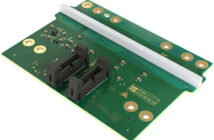
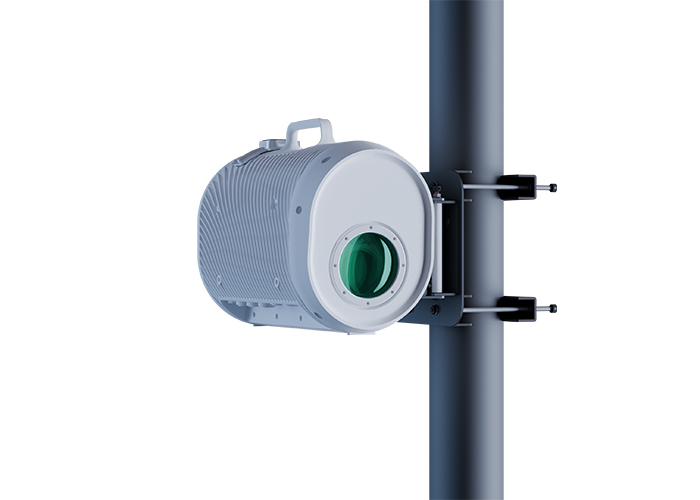
Taara Beam is designed to deliver up to 25Gbps connectivity over distances of up to 10 kilometres. The system uses an integrated photonic module containing more than a thousand miniature light emitters arranged in an optical phased array, allowing the beam to be steered, shaped and tracked electronically.
Free-space optical communication is not new. Variants have been used for years to bridge connectivity gaps where fibre is unavailable or prohibitively expensive. However, traditional systems rely on precision mechanical components to align and maintain the light beam between two fixed points — an approach that can introduce complexity, alignment challenges and maintenance overhead, particularly in dense or dynamic environments.
Taara’s approach replaces much of that mechanical infrastructure with a solid-state module. By integrating beam steering and control functions into a chip-scale photonic platform, the company claims it can reduce system size and improve reliability while enabling faster deployment.
The broader ambition is to treat optical wireless links more like semiconductor platforms — improving performance, cost and scalability over time through chip-level innovation rather than physical redesign. If realised, that model could allow incremental upgrades without overhauling entire installations.
Taara Beam is aimed at operators, enterprises and data infrastructure providers seeking high-throughput, low-latency links without trenching fibre or acquiring licensed radio spectrum. Because the system operates in the optical spectrum, it avoids radio spectrum congestion and associated licensing costs.
Potential use cases include small-cell backhaul mounted on street infrastructure, campus connectivity, data centre interconnects, temporary event networks and dense urban mesh deployments. The unit is designed to be mounted on rooftops, poles or existing structures and deployed within hours.
Taara’s earlier Lightbridge system, which uses optical beams for connectivity, is already deployed in more than 20 countries, according to the company, with telecom operators including Airtel, Digicel, T-Mobile, SoftBank and Liquid. Beam represents the next iteration, reducing form factor to what the company describes as roughly shoe-box sized hardware.
For markets such as smart cities and urban surveillance — where high-bandwidth links are needed to connect distributed cameras, sensors and edge compute nodes — the promise of fibre-like speeds without civil works is attractive. However, optical wireless links remain sensitive to environmental factors such as heavy rain, fog and line-of-sight obstructions, which can affect reliability depending on deployment conditions.
The long-term viability of photonic wireless infrastructure will likely depend on how well solid-state beam steering performs under real-world conditions and whether it can maintain alignment and throughput across varying weather and urban interference scenarios.
Taara plans to showcase the technology at Mobile World Congress, with Beam positioned as the first commercial step in what it describes as a broader photonic communications roadmap.
As demand for high-capacity connectivity grows — driven by AI workloads, edge computing and dense device deployments — interest in alternatives to fibre build-outs is intensifying. Whether silicon photonics can meaningfully shift the economics and scalability of free-space optical networking will become clearer as these systems move beyond controlled demonstrations into sustained field deployments.