Detection Technology has introduced a new high-speed detector family aimed at next-generation medical computed tomography (CT) systems, promising faster scanning, expanded slice coverage and improved low-dose performance.
The Finland-based X-ray detector manufacturer unveiled the X-ACE HS family, designed to support 32- and 64-slice rotating CT systems. The company says the new platform is intended to help CT system manufacturers increase throughput while reducing integration complexity.
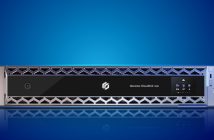
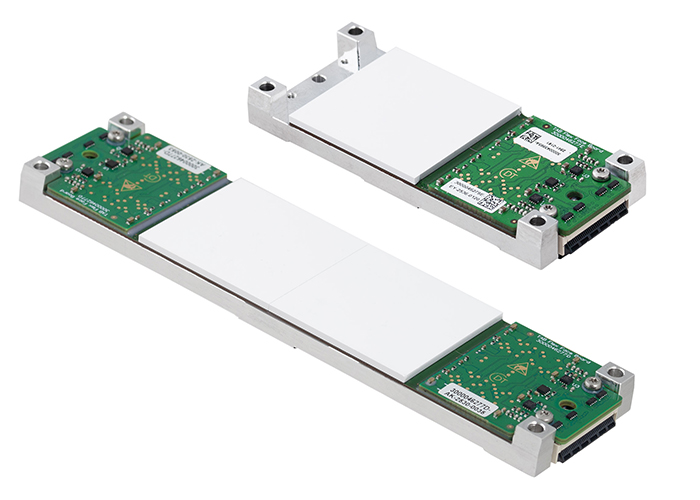
The X-ACE HS range includes the X-ACE 32 HS and X-ACE 64 HS detector modules, alongside a dedicated high-speed data acquisition system (DAS). The detectors are available either as standalone modules or as part of a turnkey subsystem.
According to Detection Technology, the system enables integration times down to 50 microseconds, supporting high-speed gantry rotation and emerging static CT imaging applications. Extended anatomical Z-coverage reaches 20 mm in the 32-slice version and 40 mm in the 64-slice version, allowing larger anatomical regions to be captured per rotation. The company says this can reduce scan times, minimise motion artefacts and improve patient throughput.
At the core of the detector design is a medical-grade GOS scintillator combined with backside-illuminated (BSI) photodiode technology. Detection Technology claims this architecture reduces detector noise by approximately 60 percent compared to its previous platform, improving signal-to-noise ratio and supporting lower radiation dose imaging. A 24-bit high-speed analogue-to-digital converter (ADC), with automatic full-scale range scaling up to 320 pC, is designed to maintain signal fidelity across a wide dynamic range.
Despite performance gains, power consumption is reported to remain below 1.5 watts for the 32-slice module and below 3 watts for the 64-slice module, potentially simplifying thermal management within CT gantries. Mechanical design features include compact module dimensions, an aluminium bracket with anti-scatter grid, and gantry guide mounting to improve alignment and structural stability. The company says simplified electrical interfaces reduce cabling and integration effort.
The X-ACE HS family can also be delivered as part of Detection Technology’s AIDA platform, which integrates detector modules, data acquisition electronics, synchronised readout, software libraries and high-bandwidth communication up to 10 Gbps. The aim is to reduce non-recurring engineering effort for OEMs and accelerate system development cycles.
In addition to conventional rotating CT systems, the platform is designed to support static and stationary CT architectures, where precise timing, mechanical stability and high signal-to-noise performance are critical. The two-sided tileable module design allows scalable detector arrays for stationary configurations.