Motorola Solutions has launched a new suite of AI-powered tools designed to help public safety agencies reclaim significant amounts of time each day, enabling faster decision-making, improved safety and greater operational accuracy.
Announced in Chicago, the new Assist Suites introduce role-based AI tailored specifically for public safety workflows. The platform brings together data from across an agency’s systems – including 911 call audio, body-worn and in-car camera footage, radio transcripts and other sources – and synthesises it into a single, verified intelligence stream that can be passed seamlessly between dispatchers and field responders.
Motorola Solutions said the Assist Suites are designed to address two converging challenges facing public safety agencies: an overwhelming growth in data and an ongoing shortage of personnel.
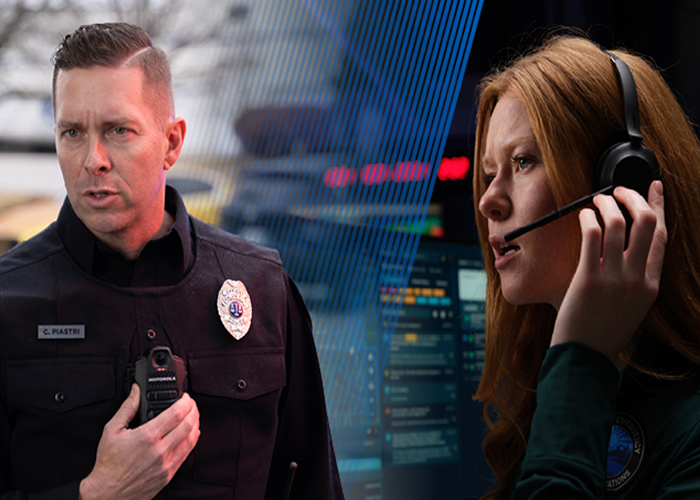
The offering is split into two initial solutions. The Dispatcher Assist Suite focuses on improving 911 call handling, dispatch and coordination, while the Responder Assist Suite is aimed at enhancing officer safety in the field and significantly reducing the administrative burden associated with report writing.
At the centre of the Responder Assist Suite is Narrative Assist, an AI-powered report-writing tool that cross-references an officer’s first-hand account with multiple verified data sources to build accurate, defensible reports. The system flags discrepancies for officer review, maintains human oversight, and preserves a full audit trail of all AI-generated suggestions.
Motorola Solutions executive vice president and chief technology officer Mahesh Saptharishi said the company is focused on delivering practical AI that saves time in moments where seconds matter. He said Assist Suites are designed to ensure intelligence flows smoothly from one role to the next, improving speed, accuracy and safety across emergency response.
Research cited by Motorola Solutions shows that nearly half of a call handler’s time on 911 calls is spent verifying information, while officers can spend up to 40 per cent of their shifts completing paperwork. Assist Suites aim to return much of that time to frontline operations.
The Dispatcher Assist Suite provides real-time transcription and translation of 911 calls, helping overcome language barriers that can otherwise add more than a minute to emergency response times. The system highlights critical keywords such as “gun” or “heart attack” and can suggest immediate next actions, allowing call handlers to focus on decision-making rather than data entry. It can also automatically triage non-emergency calls, which in some regions account for up to 65 per cent of call volumes.
The Responder Assist Suite delivers multi-source intelligence to officers before and during incidents, helping address the common problem of dispatch information differing from on-scene realities. Voice-activated queries allow officers to access agency data without taking their eyes off the situation, while automated evidence tagging and AI-driven redaction help streamline documentation and protect privacy.
According to Motorola Solutions, early deployments are already delivering measurable results. Police sergeant Michael Sellner from the White Bear Lake Police Department in Minnesota said the technology has saved the department up to 40 hours per week, cutting report-writing time from around an hour to 15 minutes and reducing video redaction tasks from 35 hours to just one.
Motorola Solutions said additional role-based Assist Suites will be introduced later this year to support other public safety and enterprise security roles, as the company continues to expand the use of AI across mission-critical operations.